The Multi-Agent Impersonation
- Richard Stocks
- Jul 21
- 2 min read

Flggd Scam School · Bank & Financial Institution Scams · Lesson 15 of 16
First an agent, then a supervisor, then the "wire fraud unit", each politely confirming the last one's story. Being passed between bank departments feels legitimate; that's the point of the show.
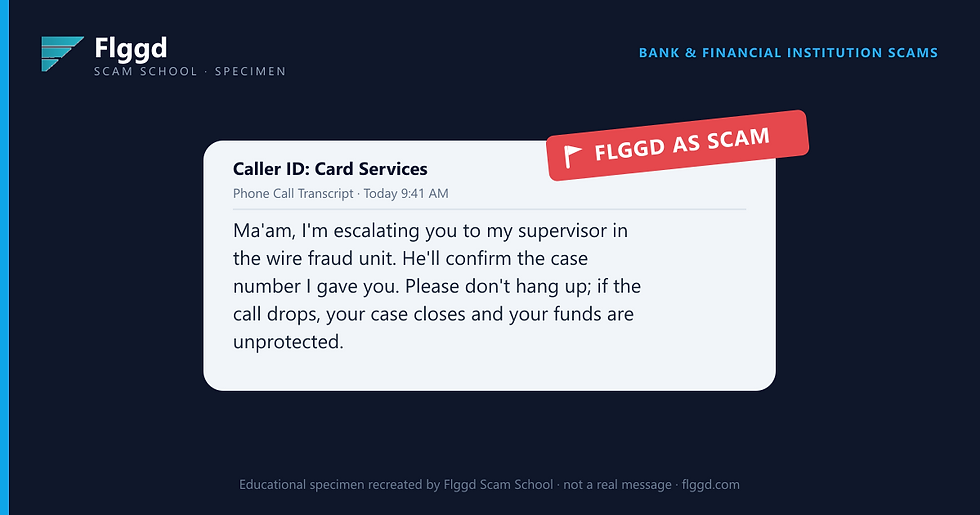
The message looks like this
Why this is a scam
One scammer is easy to doubt. Three "colleagues" who transfer you with hold music, case numbers, and consistent details feel like an institution. Scam crews run this as theater, sometimes from one room, changing voices and titles.
Each handoff also raises the stakes a little: the supervisor asks for more than the agent did, and the specialist more still. By the third voice, requests that would have alarmed you at the start feel like procedure.
The "don't hang up or your case closes" line is the giveaway. Real banks keep your case open whether you're on the phone or not.
Red flags checklist
Multiple transfers, each "confirming" what the last person said.
A case number used as proof; anyone can invent one.
Escalating requests: codes, passwords, then moving money.
Threats that hanging up will close your case or expose your funds.
The whole structure arrived from one inbound call you never asked for.
The manipulation tactic
Social proof through staging. Agreement between several official-sounding voices substitutes for evidence, and each transfer deepens your investment in the story.
What to do, and what not to do
Hang up. A real case survives a dropped call.
Call the number on the back of your card and ask if any case exists.
Give nothing to inbound callers, no matter how many of them agree.
Write down the number that called you and report it to your bank.
Warn family members; this script is heavily used on older adults.
Not sure about a message you've received? Check it in seconds with the free Flggd app.


