Ask before the money moves
A scam check your customers reach by forwarding a text, under your bank's name. Nothing to install, and no integration with your core.
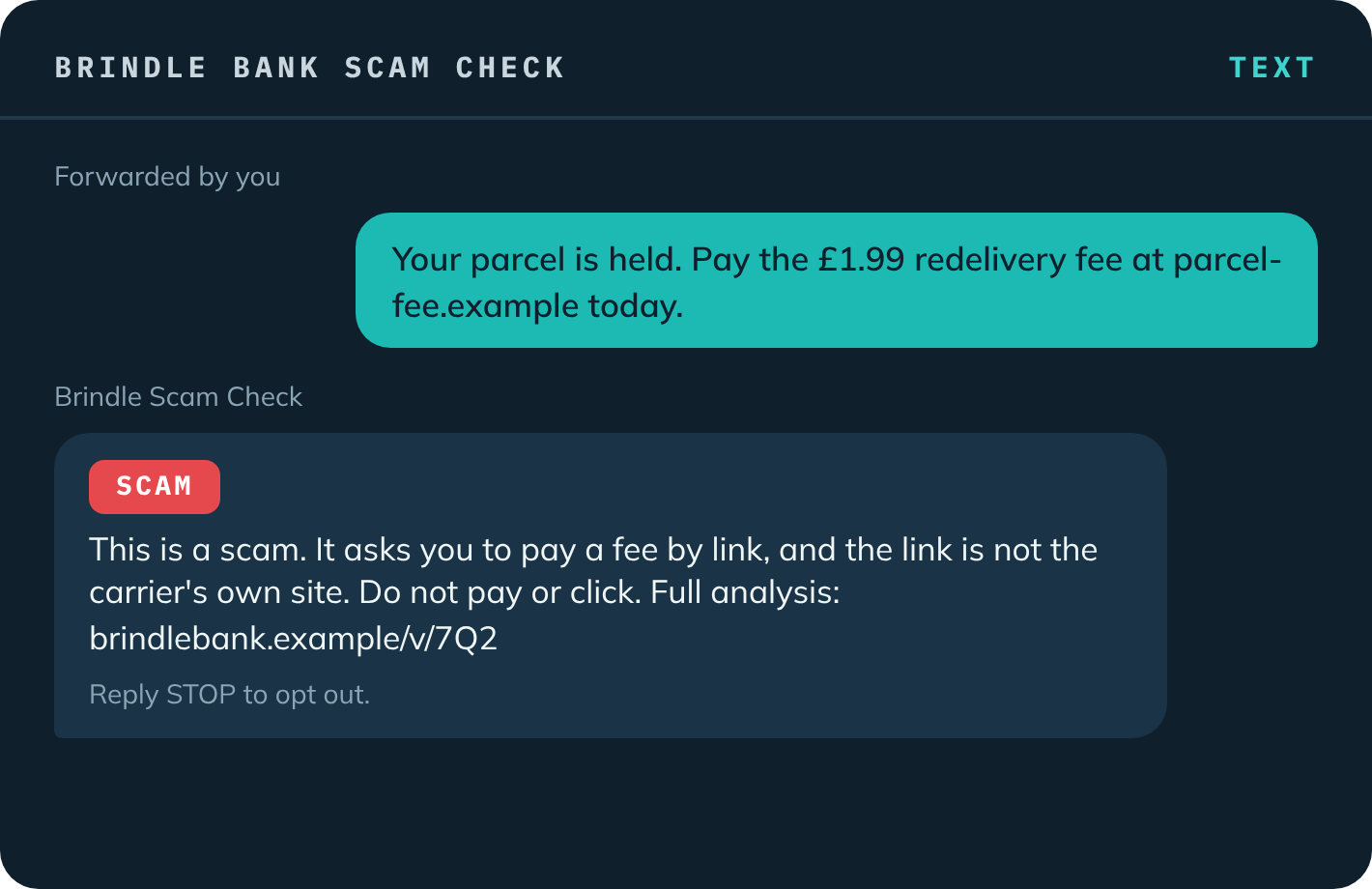
An illustration; the institution and the message are invented.
The problem
- UK victims lost £450.7 million to authorised push payment scams in 2024 (UK Finance). Since October 2024, sending and receiving firms share most reimbursements, up to £85,000 a claim (PSR).
- Most fraud tools watch the money, not the text that comes first.
Put the check where the scam arrives
Today
With Flggd SafeLine
A customer gets a convincing text
They forward it to your number
They act on it alone
A verdict with reasons, in seconds
They stop before anything is paid
How it works
- Customers join. In branch, by scanning a QR code, by sending a text to your SafeLine number, or by tapping a link in an email. You pick which ways to offer.
- They forward a text. One of four flags comes back in plain language, with the reasons named. Red: "This is a scam." Yellow and Grey: likely a scam. Green: "This appears safe. No scam signs found. If anything feels wrong, call your bank's fraud line."
- Your team sees it. A portal shows sign-ups, messages, verdicts and support issues.
What's in it, and for whom
- For your bank: a customer service in your name, measured by what never arrives.
- For your customers: a second opinion by text, with nothing to install.
- For your fraud team: somewhere to send everyone who asks "is this real?"
- For you: a launch your technology team doesn't have to build.
Every verdict is a Flggd verdict with its reasons, never a guarantee. SafeLine holds no payments and moves no money.
Download the brochure (PDF)
Email it to me
Email it to me
Bring it to your colleagues
One page that makes the case inside your bank.